
原呵呵科技 手机 iPhone 17 vs iPhone 17 Air vs iPhone 17 Pro Max Camera Comparison: Real-World Photo Differences Explained

iPhone 17 vs iPhone 17 Air vs iPhone 17 Pro Max Camera Comparison: Real-World Photo Differences Explained

Hello! I’m Yuan Hehe. Please follow me for more exciting content. iPhone 17 vs iPhone 17 Air vs iPhone 17 Pro Max

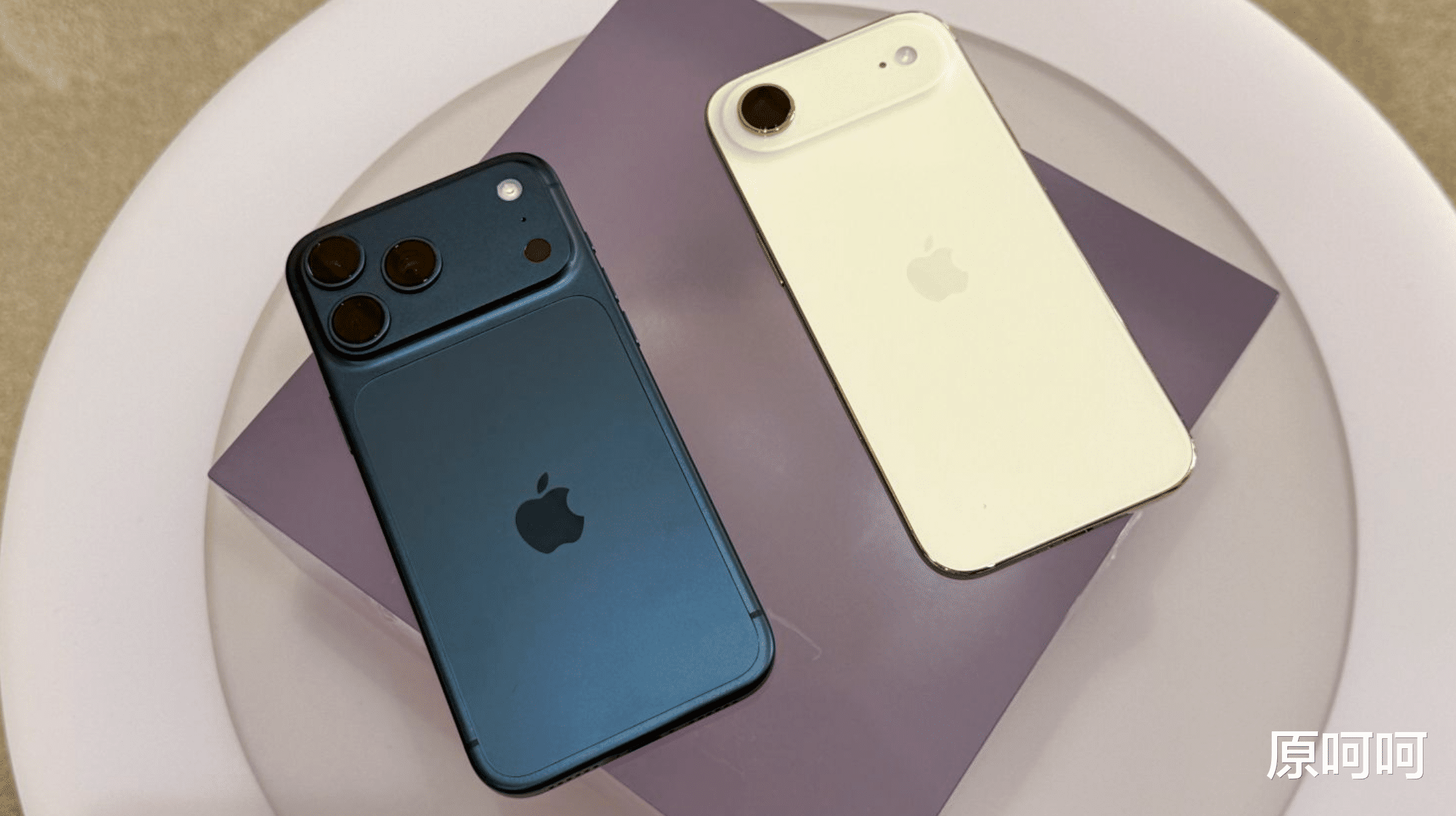
In recent years, the iPhone lineup has never been as diverse as it is now. Within the same generation, multiple product lines are available, encompassing different design languages, body sizes, color schemes, battery specifications, and imaging systems, giving users unprecedented freedom of choice.

-

Overall, the standard iPhone 17 has a significantly stronger presence. In contrast, the iPhone Air takes a completely different approach—it maintains the same performance and display size as the high-end models, but opts for a more minimalist imaging solution, retaining only a single rear camera.

It is precisely because of this difference that what truly causes hesitation is not performance or screen, but rather the imaging approach. Single-camera solutions are positioned as “highly integrated imaging systems,” but can they truly differentiate themselves from multi-camera solutions in actual shooting?
-

The most direct way to address these questions is through real-world comparison. Next, I will analyze actual sample photos from different scenarios, breaking down the real differences in image performance to see where different iPhones truly stand behind the lens.

Camera comparison: Daytime

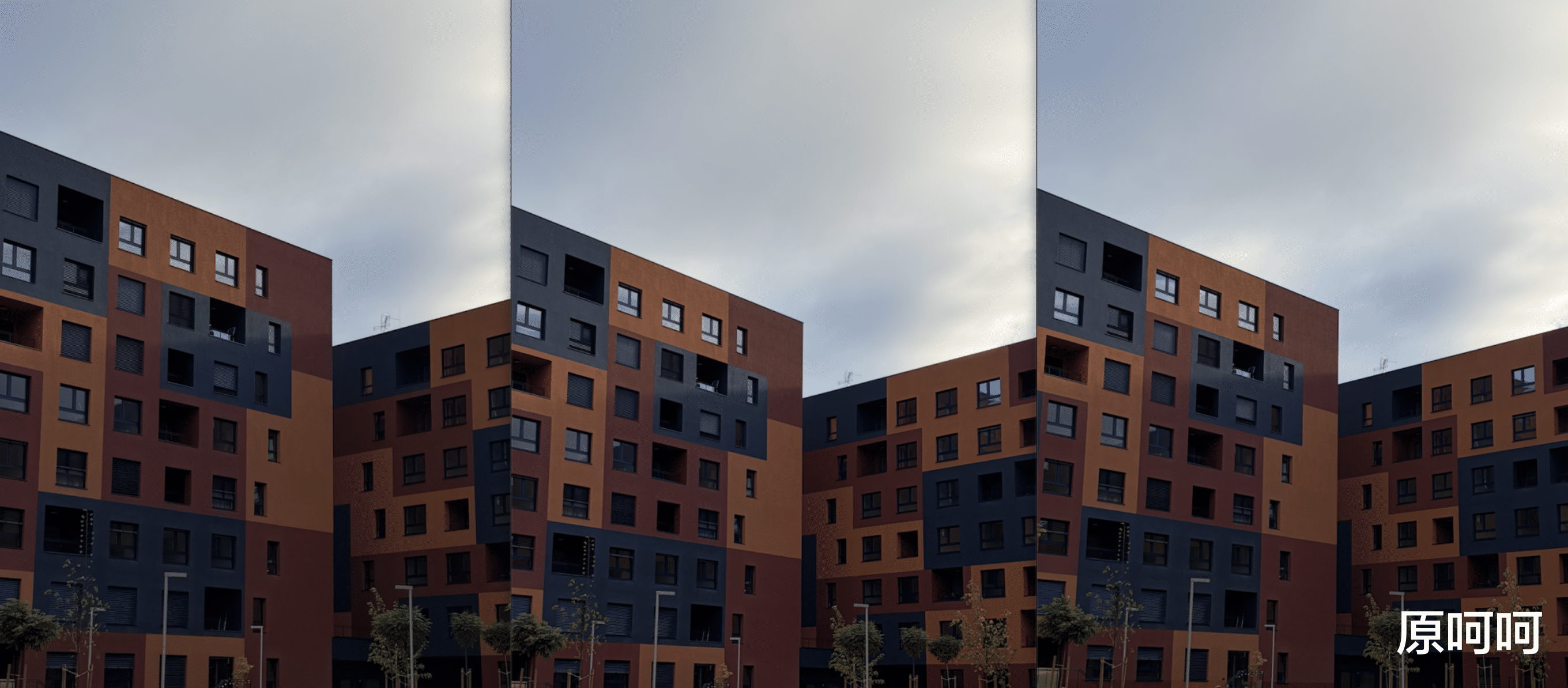
The sample photos below, from left to right, are of the iPhone 17 Pro Max, iPhone 17, and iPhone Air. In well-lit conditions and with the resolution maximized, the image quality differences between these three models are actually very limited.
-

Whether it’s image detail, color reproduction, or overall clarity, all three phones maintain a consistent level of quality, making it almost impossible to distinguish which image came from which device with the naked eye. Provided the lighting conditions are ideal, and the shooting resolution is increased to 48 megapixels, all three phones can output photos with rich detail and accurate colors.

The conclusion is clear: under sunlight, the performance of the three is basically the same.

Camera Comparison: Zoom Performance

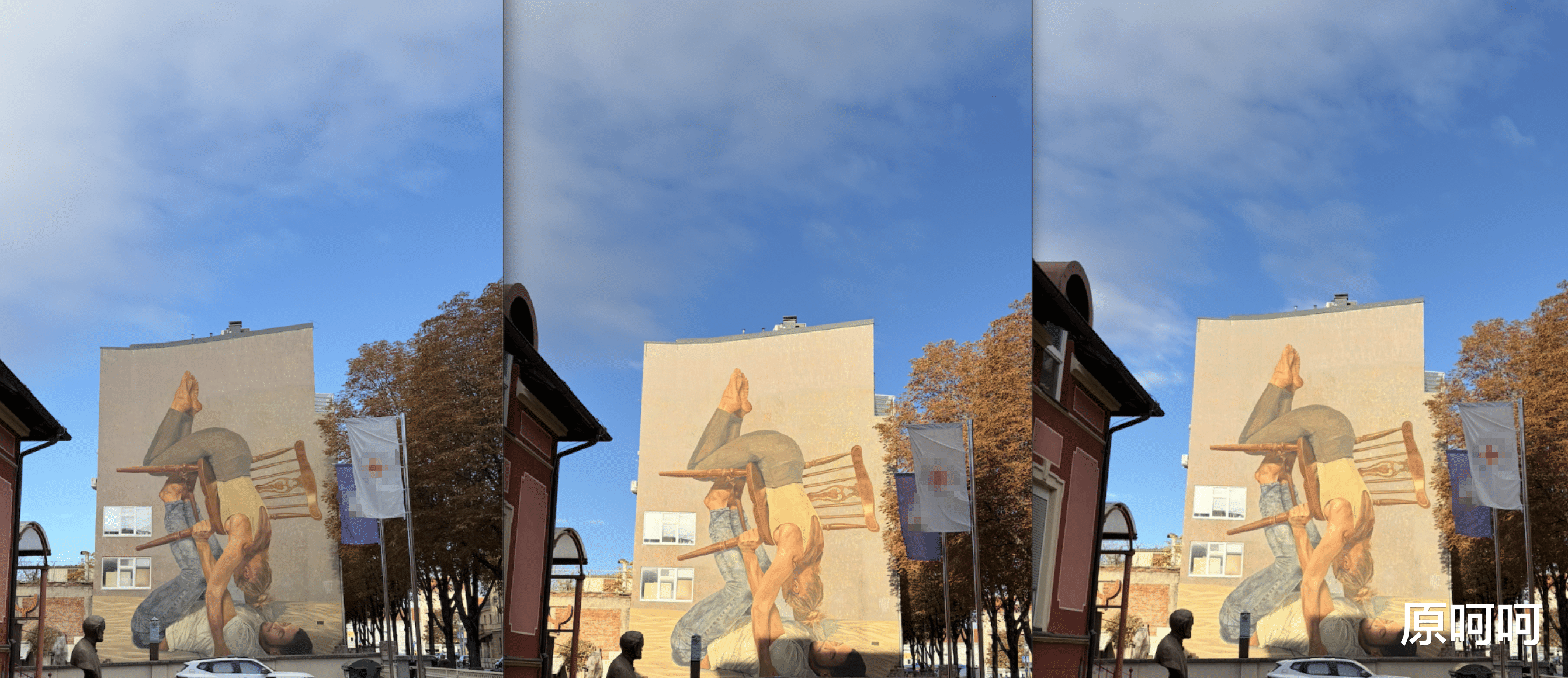
The following images, from left to right, are: iPhone 17 Pro Max, iPhone 17, and iPhone Air. Without zooming and maintaining the default shooting magnification, the three phones maintain a very similar imaging style, with image resolution and color reproduction essentially at the same level.
-

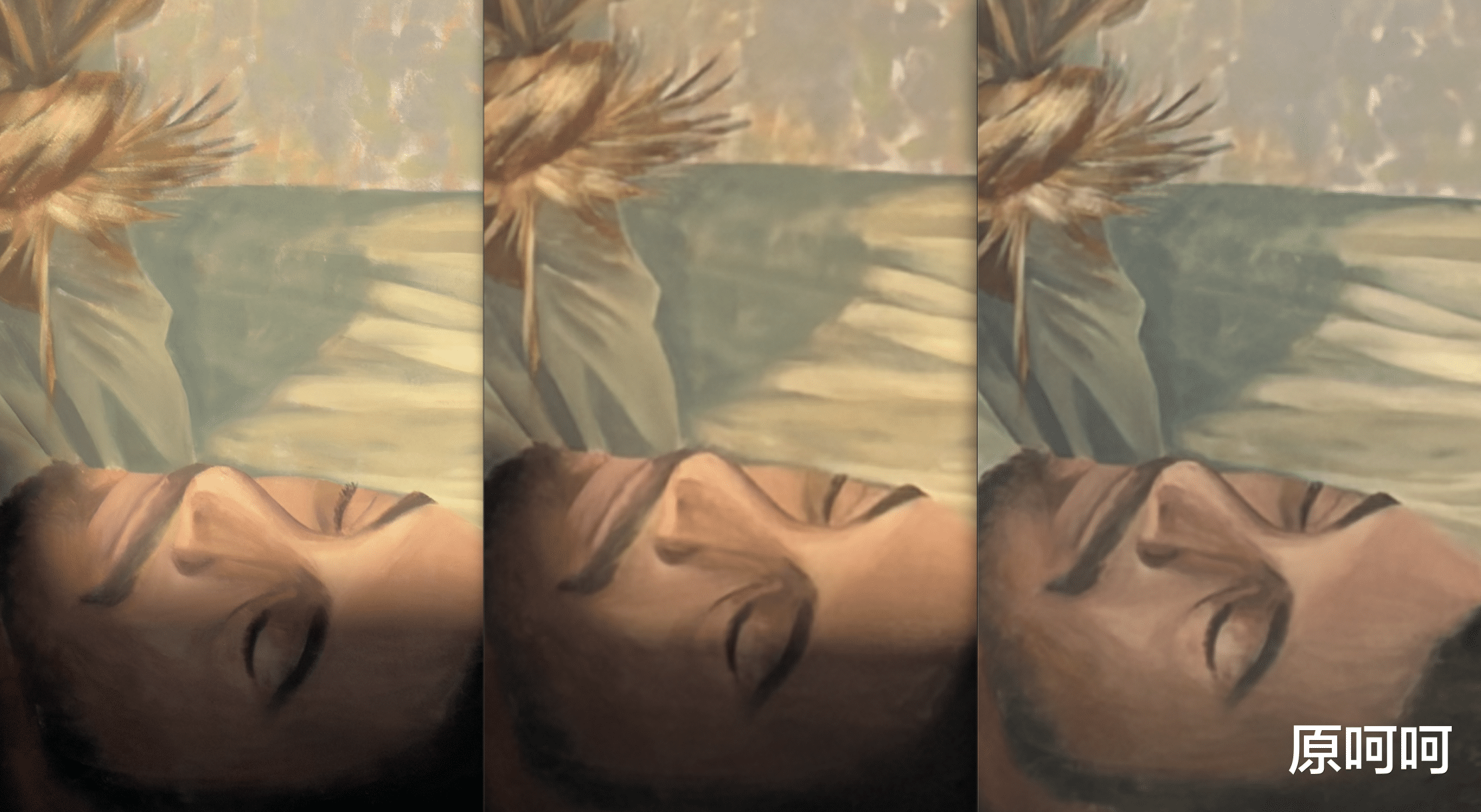
However, the differences become immediately apparent when zooming in. The iPhone 17 Pro and Pro Max feature a telephoto lens that supports 4x optical zoom, while the iPhone 17 and iPhone Air lack a dedicated telephoto module. This means that the latter two rely entirely on cropping from the main camera when zooming in. Of course, all three phones support zooming beyond 2x, achieved through cropping from their 48MP high-resolution images.

At high magnification (e.g., 8x), the advantages of the iPhone 17 Pro Max are very clear: image details are more complete, edges are sharper, and text and textures don’t become blurred too early. The two models without telephoto lenses, on the other hand, clearly lag behind in terms of sharpness and detail retention.
-

Interestingly, under the same conditions, the iPhone Air’s zoom performance is slightly better than the iPhone 17 overall. Whether it’s detail reproduction or image stability, the Air’s main camera cropping results are cleaner. This difference repeatedly appears in different scenarios and at different zoom levels, indicating that this is not a coincidence, but rather more likely a difference at the main camera hardware or algorithm level.

In short: the iPhone 17 Pro Max wins without a doubt in zoom shooting; but what is truly surprising is that the iPhone Air outperforms the iPhone 17.

Camera Showdown: Ultra Wide Angle

The images, from left to right, show the iPhone 17 Pro Max and iPhone 17. Of the three models, only the iPhone 17 Pro Max and iPhone 17 are equipped with an ultra-wide-angle camera; the iPhone Air not only lacks an ultra-wide-angle lens, but it also cannot frame shots at a default 1x angle or lower, which significantly limits its practical use.

-

It’s worth noting that even on the iPhone 17 and iPhone 17 Pro Max, the image quality of the ultra-wide-angle lens is significantly weaker than that of the main camera. Image sharpness is noticeably reduced, and edge details are more prone to blurring. Therefore, unless absolutely necessary, I don’t recommend using the ultra-wide-angle lens frequently.

The conclusion is clear: the iPhone 17 and iPhone 17 Pro Max offer a usable but not outstanding ultra-wide-angle experience; while the iPhone Air completely lacks this shooting capability, putting it at a significant disadvantage in terms of framing freedom.

Camera comparison: Low-light environment

The images, from left to right, show: iPhone 17 Pro Max, iPhone 17, and iPhone Air. Low light has always been a crucial test of a phone’s camera capabilities, and one of the aspects I pay the most attention to. This is because in nighttime environments, the differences between algorithms, sensors, and light-gathering capabilities are often magnified.

-

This time, however, the images were not noticeably blurry, and the details in the shadows were not excessively smoothed out. All three models were able to consistently produce a night shot that was “acceptable and shareable.” If we had to pinpoint the differences, the iPhone Air had a slight advantage in color reproduction, with the color temperature in the night scene being closer to what the naked eye sees, while the other two were slightly more aggressive in contrast.

However, this difference is very subtle and is only noticeable when compared side-by-side. In short, in low-light shooting, the overall performance of the three models is basically at the same level.

Camera Showdown: Macro Performance

The images, from left to right, show: iPhone 17 Pro Max, iPhone 17, and iPhone Air. This comparison isn’t entirely fair to the iPhone Air, as it lacks a dedicated macro mode. When the lens is close to the flower, both the iPhone 17 and iPhone 17 Pro Max automatically activate macro mode, with a virtually imperceptible transition. The resulting photos are remarkably similar in sharpness, color reproduction, and detail. The petal textures are clear, the background transitions are natural, and the overall look is stable and pleasing.

-

On the iPhone Air, the same shooting distance only resulted in a noticeably out-of-focus photo. To compensate for this, I had to use 2x zoom to get closer to the subject. The resulting image was acceptable in terms of composition, but the detail was significantly inferior to the other two models. Additionally, the system actively blurred the background, processing the image to resemble portrait mode, which looked decent but clearly deviated from the essential requirements of macro photography.

In short: the iPhone 17 and iPhone 17 Pro Max perform maturely and stably in macro photography, while the iPhone Air does not have true macro capabilities, which is very obvious in actual shooting.

iPhone 17, iPhone Air, and iPhone 17 Pro Max: Which is better for taking photos?

Overall, all three phones boast high-quality cameras, but differences remain in their applicability and versatility.

-

First and foremost, their main camera performance is remarkably similar. Whether shooting in daylight, capturing nighttime scenes, taking everyday street photos, or shooting selfies, all three models deliver stable, clean, and naturally colored images. The iPhone Air, in particular, produces image quality that significantly exceeds many people’s expectations, fully meeting the daily shooting needs of most users.

The real difference lies in zoom and video capabilities. Whether you frequently zoom in to shoot distant scenes or freely switch between different focal lengths directly impacts the user experience. In this regard, the iPhone 17 Pro Max has a clear advantage. It not only offers more control over zoom image quality but also provides greater adjustability and professionalism in video shooting, making it more suitable for users who demand high levels of image control.

-

If you’re used to fine-tuning shooting parameters, frequently record video, or need more storage space to accommodate high-bitrate footage, then the iPhone 17 Pro Max would be a better choice. Its camera system offers broader coverage and greater tolerance for errors.

However, if your shooting needs are mainly to record life, taking photos occasionally and shooting at night occasionally, and you don’t rely on telephoto lenses or complex video functions, then both the iPhone 17 and iPhone Air can already provide a sufficiently excellent, or even satisfactory, photography experience.

If you enjoyed this article, please consider giving a tip! Also, don’t forget to share, like, comment, and follow!

本文原呵呵科技原创,转载请注明出处。

作者: 原呵呵科技

上一篇
下一篇
广告位

广告

发表回复

您的电子邮箱地址不会被公开。 必填项已用*标注

Ad - Google

联系我们

联系我们

在线咨询: QQ交谈

邮箱: 1039034066@qq.com

工作时间:周一至周五,9:00-17:30,节假日休息

关注微信
微信扫一扫关注我们

微信扫一扫关注我们

关注微博
返回顶部
zh_CN简体中文

Hello! I’m Yuan Hehe. Please follow me for more exciting content. iPhone 17 vs iPhone 17 Air vs iPhone 17 Pro Max

In recent years, the iPhone lineup has never been as diverse as it is now. Within the same generation, multiple product lines are available, encompassing different design languages, body sizes, color schemes, battery specifications, and imaging systems, giving users unprecedented freedom of choice.

-

Overall, the standard iPhone 17 has a significantly stronger presence. In contrast, the iPhone Air takes a completely different approach—it maintains the same performance and display size as the high-end models, but opts for a more minimalist imaging solution, retaining only a single rear camera.

It is precisely because of this difference that what truly causes hesitation is not performance or screen, but rather the imaging approach. Single-camera solutions are positioned as “highly integrated imaging systems,” but can they truly differentiate themselves from multi-camera solutions in actual shooting?

-

The most direct way to address these questions is through real-world comparison. Next, I will analyze actual sample photos from different scenarios, breaking down the real differences in image performance to see where different iPhones truly stand behind the lens.

Camera comparison: Daytime

The sample photos below, from left to right, are of the iPhone 17 Pro Max, iPhone 17, and iPhone Air. In well-lit conditions and with the resolution maximized, the image quality differences between these three models are actually very limited.

-

Whether it’s image detail, color reproduction, or overall clarity, all three phones maintain a consistent level of quality, making it almost impossible to distinguish which image came from which device with the naked eye. Provided the lighting conditions are ideal, and the shooting resolution is increased to 48 megapixels, all three phones can output photos with rich detail and accurate colors.

The conclusion is clear: under sunlight, the performance of the three is basically the same.

Camera Comparison: Zoom Performance

The following images, from left to right, are: iPhone 17 Pro Max, iPhone 17, and iPhone Air. Without zooming and maintaining the default shooting magnification, the three phones maintain a very similar imaging style, with image resolution and color reproduction essentially at the same level.

-

However, the differences become immediately apparent when zooming in. The iPhone 17 Pro and Pro Max feature a telephoto lens that supports 4x optical zoom, while the iPhone 17 and iPhone Air lack a dedicated telephoto module. This means that the latter two rely entirely on cropping from the main camera when zooming in. Of course, all three phones support zooming beyond 2x, achieved through cropping from their 48MP high-resolution images.

At high magnification (e.g., 8x), the advantages of the iPhone 17 Pro Max are very clear: image details are more complete, edges are sharper, and text and textures don’t become blurred too early. The two models without telephoto lenses, on the other hand, clearly lag behind in terms of sharpness and detail retention.

-

Interestingly, under the same conditions, the iPhone Air’s zoom performance is slightly better than the iPhone 17 overall. Whether it’s detail reproduction or image stability, the Air’s main camera cropping results are cleaner. This difference repeatedly appears in different scenarios and at different zoom levels, indicating that this is not a coincidence, but rather more likely a difference at the main camera hardware or algorithm level.

In short: the iPhone 17 Pro Max wins without a doubt in zoom shooting; but what is truly surprising is that the iPhone Air outperforms the iPhone 17.

Camera Showdown: Ultra Wide Angle

The images, from left to right, show the iPhone 17 Pro Max and iPhone 17. Of the three models, only the iPhone 17 Pro Max and iPhone 17 are equipped with an ultra-wide-angle camera; the iPhone Air not only lacks an ultra-wide-angle lens, but it also cannot frame shots at a default 1x angle or lower, which significantly limits its practical use.

-

It’s worth noting that even on the iPhone 17 and iPhone 17 Pro Max, the image quality of the ultra-wide-angle lens is significantly weaker than that of the main camera. Image sharpness is noticeably reduced, and edge details are more prone to blurring. Therefore, unless absolutely necessary, I don’t recommend using the ultra-wide-angle lens frequently.

The conclusion is clear: the iPhone 17 and iPhone 17 Pro Max offer a usable but not outstanding ultra-wide-angle experience; while the iPhone Air completely lacks this shooting capability, putting it at a significant disadvantage in terms of framing freedom.

Camera comparison: Low-light environment

The images, from left to right, show: iPhone 17 Pro Max, iPhone 17, and iPhone Air. Low light has always been a crucial test of a phone’s camera capabilities, and one of the aspects I pay the most attention to. This is because in nighttime environments, the differences between algorithms, sensors, and light-gathering capabilities are often magnified.

-

This time, however, the images were not noticeably blurry, and the details in the shadows were not excessively smoothed out. All three models were able to consistently produce a night shot that was “acceptable and shareable.” If we had to pinpoint the differences, the iPhone Air had a slight advantage in color reproduction, with the color temperature in the night scene being closer to what the naked eye sees, while the other two were slightly more aggressive in contrast.

However, this difference is very subtle and is only noticeable when compared side-by-side. In short, in low-light shooting, the overall performance of the three models is basically at the same level.

Camera Showdown: Macro Performance

The images, from left to right, show: iPhone 17 Pro Max, iPhone 17, and iPhone Air. This comparison isn’t entirely fair to the iPhone Air, as it lacks a dedicated macro mode. When the lens is close to the flower, both the iPhone 17 and iPhone 17 Pro Max automatically activate macro mode, with a virtually imperceptible transition. The resulting photos are remarkably similar in sharpness, color reproduction, and detail. The petal textures are clear, the background transitions are natural, and the overall look is stable and pleasing.

-

On the iPhone Air, the same shooting distance only resulted in a noticeably out-of-focus photo. To compensate for this, I had to use 2x zoom to get closer to the subject. The resulting image was acceptable in terms of composition, but the detail was significantly inferior to the other two models. Additionally, the system actively blurred the background, processing the image to resemble portrait mode, which looked decent but clearly deviated from the essential requirements of macro photography.

In short: the iPhone 17 and iPhone 17 Pro Max perform maturely and stably in macro photography, while the iPhone Air does not have true macro capabilities, which is very obvious in actual shooting.

iPhone 17, iPhone Air, and iPhone 17 Pro Max: Which is better for taking photos?

Overall, all three phones boast high-quality cameras, but differences remain in their applicability and versatility.

-

First and foremost, their main camera performance is remarkably similar. Whether shooting in daylight, capturing nighttime scenes, taking everyday street photos, or shooting selfies, all three models deliver stable, clean, and naturally colored images. The iPhone Air, in particular, produces image quality that significantly exceeds many people’s expectations, fully meeting the daily shooting needs of most users.

The real difference lies in zoom and video capabilities. Whether you frequently zoom in to shoot distant scenes or freely switch between different focal lengths directly impacts the user experience. In this regard, the iPhone 17 Pro Max has a clear advantage. It not only offers more control over zoom image quality but also provides greater adjustability and professionalism in video shooting, making it more suitable for users who demand high levels of image control.

-

If you’re used to fine-tuning shooting parameters, frequently record video, or need more storage space to accommodate high-bitrate footage, then the iPhone 17 Pro Max would be a better choice. Its camera system offers broader coverage and greater tolerance for errors.

However, if your shooting needs are mainly to record life, taking photos occasionally and shooting at night occasionally, and you don’t rely on telephoto lenses or complex video functions, then both the iPhone 17 and iPhone Air can already provide a sufficiently excellent, or even satisfactory, photography experience.

If you enjoyed this article, please consider giving a tip! Also, don’t forget to share, like, comment, and follow!